
Can a gummy smile be corrected without surgery? Here’s when surgery is actually necessary

Feeling confident about your smile can affect both how you interact with others and how you feel about yourself.
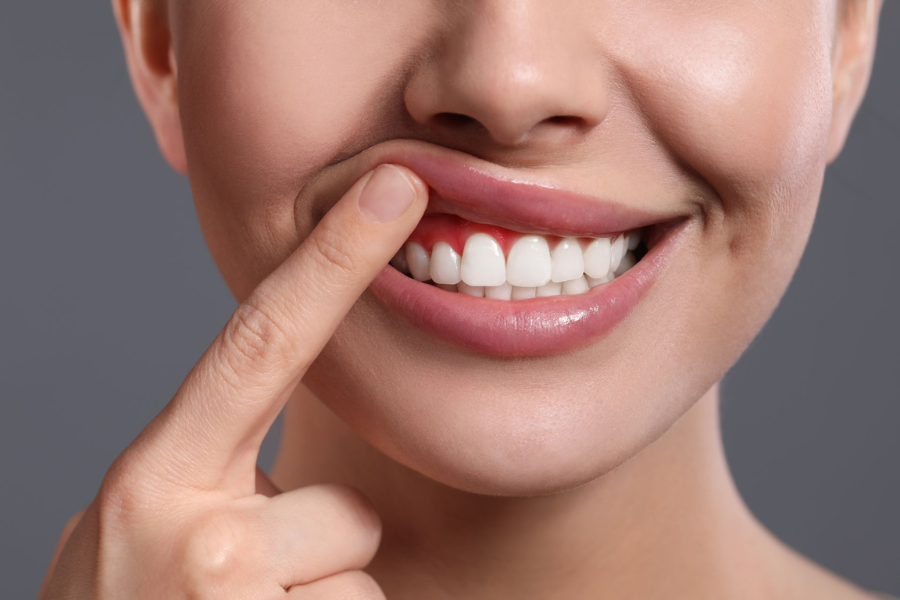
For some people, however, showing more gum tissue than they would like when smiling can make them feel self-conscious. This is commonly known as a gummy smile.
The good news is that not every gummy smile requires surgery. Today, several conservative and minimally invasive treatments can improve the appearance of the smile, especially when the underlying cause is not related to the jawbone.
The right treatment depends on what is causing the excess gum display. That’s why a professional evaluation is essential to determine which approach will provide the most natural and effective results.
What is a gummy smile?
A gummy smile occurs when a noticeable amount of gum tissue is visible above the upper teeth when you smile, typically more than 3 to 4 millimeters.
It is not considered a disease or health condition. However, it can affect the overall balance of the smile and may make some people feel uncomfortable when smiling, laughing, speaking, or taking photos.
Can you fix a gummy smile without surgery?
Yes. In many cases, you can.
Surgery is not always necessary to correct a gummy smile. If the excess gum display is caused by an overactive upper lip, a mild excess of gum tissue, or an imbalance between the size of the teeth and gums, minimally invasive treatments may provide excellent results.
However, if the gummy smile is caused by excessive vertical growth of the upper jaw or a more complex skeletal issue, surgery may be the most effective option for achieving a stable, long-term correction.
Simply put, the cause of your gummy smile determines the best treatment.
How do you know if you need surgery?
One of the easiest ways to understand your options is to look at the underlying cause and the treatment typically recommended for it.
| If the cause is | Treatment may include |
| Overactive upper lip | Botox or other conservative treatments |
| Mild excess gum tissue | Minimally invasive gum contouring |
| Teeth that appear short because of excess gum tissue | Crown lengthening |
| Excessive vertical growth of the upper jaw | Orthognathic surgery |
These are general guidelines. The right treatment should always be determined after a clinical evaluation by a qualified dental professional.
What are the non-surgical treatments for a gummy smile?
Depending on the diagnosis, your dentist may recommend conservative or minimally invasive procedures that improve the balance between your teeth, gums, and lips without major surgery.
Botox
If your upper lip lifts too high when you smile, Botox injections may help reduce the activity of the muscles responsible for that movement. This can limit how much gum tissue shows when you smile.
The results are temporary, so follow-up treatments are usually needed to maintain the effect.
Minimally invasive gum contouring
For patients with a small amount of excess gum tissue, gum contouring can reshape the gumline and create a more balanced proportion between the teeth and gums.
Depending on the case, this can be performed using minimally invasive techniques with relatively little downtime.
Cosmetic dental restorations
If the teeth are worn down, disproportionately small, or appear too short, cosmetic treatments such as veneers or crowns may help create a more balanced smile.
These treatments are not appropriate for every gummy smile, so the teeth, gums, bite, and overall smile proportions should be evaluated before deciding on a treatment plan.
When is surgery necessary for a gummy smile?
Surgical treatment may be recommended when conservative options cannot adequately address the underlying cause of the gummy smile.
Common procedures include:
Gingivoplasty
Gingivoplasty reshapes excess gum tissue to improve the contour of the gumline and create a more balanced tooth-to-gum ratio.
In many cases, it can be performed using minimally invasive techniques.
Crown lengthening
Crown lengthening may be recommended when gum tissue, and sometimes the underlying bone, covers too much of the natural tooth.
The procedure exposes more of the tooth structure and may also be performed before cosmetic restorations such as veneers or crowns.
Orthognathic surgery
Orthognathic, or corrective jaw surgery, may be necessary when a gummy smile is caused by excessive vertical growth of the upper jaw.
Because the issue originates in the skeletal structure rather than just the gums or lips, repositioning the upper jaw can provide a more stable and comprehensive correction.
What is the best treatment for a gummy smile?
There is no single treatment that works best for everyone.
The most effective approach is the one that addresses the underlying cause of the gummy smile, rather than simply reducing the amount of visible gum tissue.
Before recommending treatment, a dental professional may evaluate factors such as how much gum tissue shows when you smile, how your upper lip moves, the size and shape of your teeth, your gumline, and the structure of your upper jaw.
An accurate diagnosis makes it possible to choose a treatment that delivers natural-looking, functional, and long-lasting results.
A more balanced smile starts with the right diagnosis
Many people assume that surgery is the only way to correct a gummy smile, but that isn’t always the case.
Some patients can achieve excellent results with conservative or minimally invasive treatments, while others may benefit from a surgical procedure that addresses the underlying cause.
At Smile Design Peru, every patient receives a personalized evaluation to determine what is causing their gummy smile and which treatment best fits their individual needs.
This approach makes it possible to create a more balanced, natural-looking smile while avoiding unnecessary procedures.